September 10, 2026 | United States
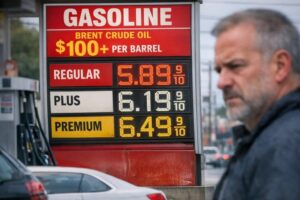
American drivers are facing renewed pressure at the pump after global oil prices climbed above $100 a barrel amid escalating tensions involving the United States and Iran.
Brent crude, the international benchmark for oil prices, moved above the $100 mark this week as concerns grew about possible disruptions to global energy supplies.
The latest surge follows renewed attacks involving shipping and oil infrastructure in the Middle East, raising fears that supplies moving through key transportation routes could face further disruption.
Gas Prices Hit American Consumers
The effects are already being felt across the United States.
The national average price for gasoline has climbed to approximately $4.22 per gallon, while diesel prices have risen even more sharply.
Higher fuel prices can affect much more than drivers. Transportation costs influence the price of moving food and consumer products across the country, while airlines and other industries are also exposed to rising energy costs.
Why Oil Prices Are Rising
One of the biggest concerns is the Strait of Hormuz, a critical shipping route that normally handles a significant share of the world’s oil and gas supplies.
Continued instability in the region has reduced oil flows and increased uncertainty among traders about how much energy will remain available to global markets.
Brent crude has risen significantly since early August as hopes for a lasting end to the fighting have faded.
For American households, the key question now is whether oil prices remain above $100 — and how long elevated gasoline prices will continue.
Sources: Associated Press and Reuters | September 9–10, 2026