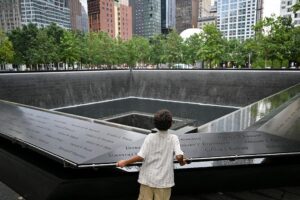
September 10, 2026 | New York City
Twenty-five years after the September 11 attacks, researchers are preparing a major new effort to study what happened to the health of children who were exposed to the toxic dust and debris surrounding the World Trade Center.
Around 25,000 children were living or attending school near the World Trade Center when the Twin Towers were attacked on September 11, 2001, according to Reuters. Thousands more children lived in surrounding neighborhoods, while some of those exposed were still in the womb.
Many Children Were Never Fully Tracked
When the towers collapsed, an enormous cloud spread across Lower Manhattan containing pulverized concrete, glass fibers, asbestos and other pollutants.
Government-funded health programs later followed many firefighters, first responders and adult survivors.
But relatively few children were included in those long-term studies.
That left researchers without enough information to determine whether exposure during childhood contributed to illnesses that might not appear until decades later.
Those Children Are Now Adults
Many of the children exposed in 2001 are now in their 30s and early 40s.
Scientists want to examine whether exposure to the toxic cloud — as well as the severe psychological trauma surrounding the attacks — affected their long-term health.
Researchers are particularly interested in potential links involving chronic diseases, including cancers, cardiovascular conditions and reproductive-health problems. Importantly, the study is intended to investigate those questions; it does not mean researchers have already established that 9/11 exposure caused such illnesses in this group.
CDC Will Oversee New Research
The U.S. Centers for Disease Control and Prevention is preparing to establish a World Trade Center Youth Research Coordinating Center.
The effort follows a 2022 decision by Congress to fund research involving people who were 21 or younger — or still in utero — when they were exposed in and around Lower Manhattan and parts of Brooklyn.
Researchers plan to recruit both people who were exposed and a comparison group who were not, allowing scientists to examine differences in health outcomes.
Why Researchers Say It Matters
The study could finally answer questions that some families have carried for a quarter-century.
It could also help public-health officials understand how children respond to large-scale environmental disasters and improve preparations for future emergencies.
As America prepares to commemorate the 25th anniversary of September 11, attention is therefore turning not only to those who died that day, but also to people who survived and may still be living with its consequences.
Source: Reuters — September 10, 2026.